Stardog Documentation System
Restructured Stardog’s documentation around how users actually work replacing product-first organization with clear, task-based pathways.
Tools
Figma
Slack
Google Suite
Notion
Team
1 PM & Research Lead
1 Engineer
4 Designers
Contribution
Led the redesign of Hack4Impact-UMD’s internal recruitment portal, reviewer dashboard and application form.
Conducted research with the Director of Recruitment and reviewers to uncover pain points in the fragmented application process.
Helped create the design system
Guided our design team in running user tests and collaborating with engineers and project managers to align on feasibility.
00 OVERVIEW
About
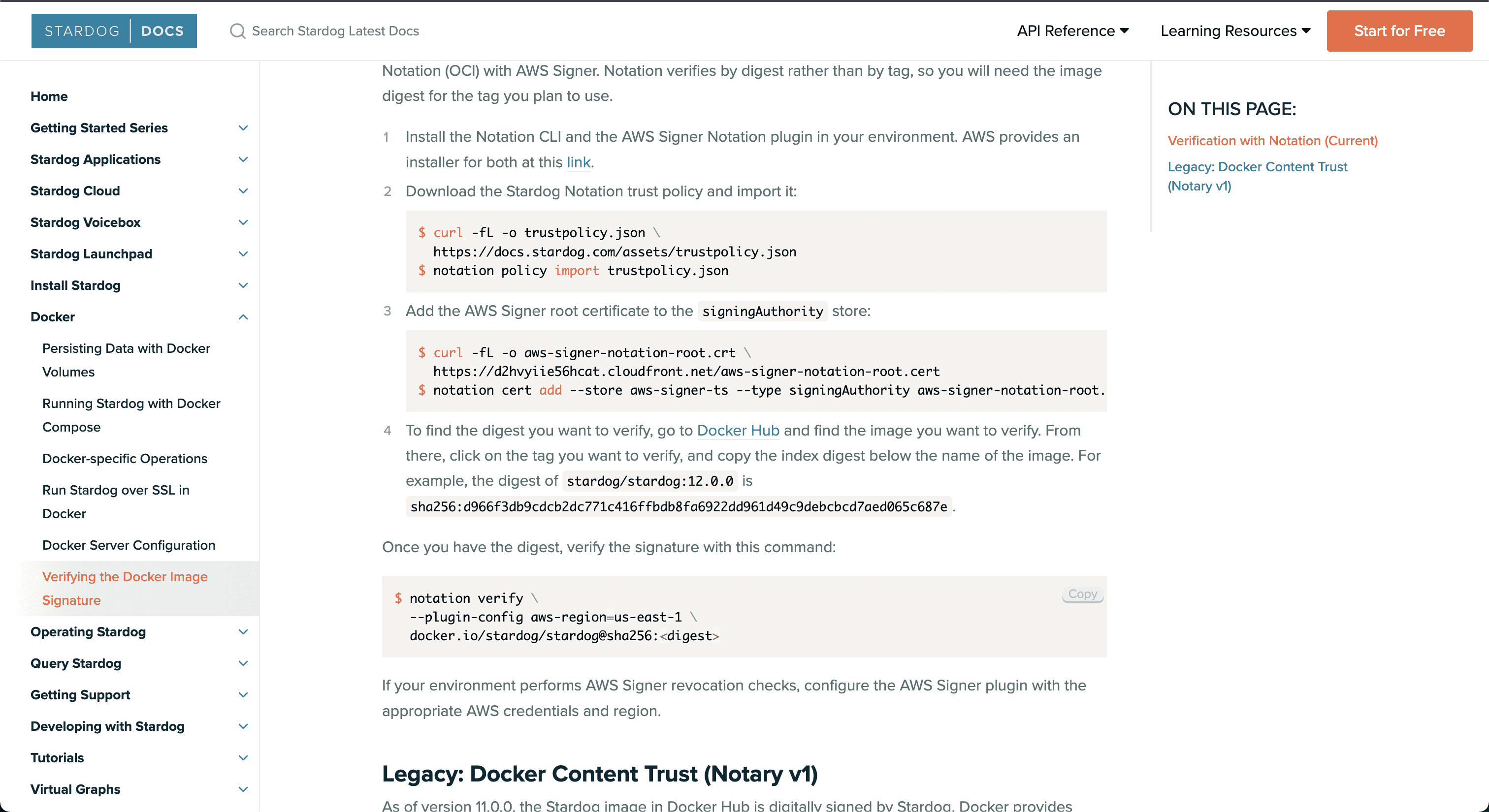
As part of a UX consultancy engagement through UMD iConsultancy, our team partnered with Stardog an enterprise knowledge graph platform to analyze and improve their documentation experience. Our goal was to identify usability gaps and develop a content strategy to make the docs more accessible for both technical and non-technical users.
Centralized dashboard
Made the experience more transparent and engaging for applicants.
Simplified application flow that improved efficiency
Reduced reviewer workload
The Problem
Stardog's documentation was built for engineers but its users aren't all engineers. Internal employees, business stakeholders, and external clients were all struggling to navigate the same docs, leading to increased reliance on internal support, slower onboarding, and user frustration.
Research Approach
• Competitive Analysis across 5 platforms (Neo4j, Amazon Neptune, Ontotext, Graphwise, Palantir) to benchmark documentation patterns and identify opportunities
Heuristic Evaluation to assess usability against established UX principles
Information Architecture & Content Audit to map the existing structure and surface inconsistencies
9 User Interviews with a mix of internal employees and external clients ranging from engineers to sales reps
2 Usability Tests with internal Stardog participants
Survey of 59 internal users across engineering, support, product, consulting, and sales
We ran a multi-method research sprint to fully understand the problem space before jumping to solutions:
01 RESEARCH
User Interviews - What are our Users Saying
To better understand how Stardog’s documentation supports real users, we conducted interviews with 9 participants. 5 internal employees and 4 external clients. Our goal was to uncover friction points across onboarding, navigation, search, and content clarity, and to identify where the experience breaks down between technical and non-technical users.
We aimed to understand how people actually use the docs not how they’re intended to be used.
The documentation architecture favors those who already understand the system. It lacks clear pathways, strong cross-linking, and task-oriented routes.
The documentation reflects how engineers think about the product, not how different personas experience it.
There is no strong editorial system. Documentation feels decentralized and engineering-owned rather than user-centered and curated.
The documentation is not the fastest path to clarity so users bypass it with LLM's. Using it for intent interpreters, summarizers, jargon translator, search capabilities
Competitive Analysis - What are others doing that Stardog isn't?
We analyzed 5 competing platforms: Neo4j, Amazon Neptune, Ontotext, Graphwise, and Palantir. We were looking for documentation patterns, navigation structures, and features that could inform our redesign direction.
What we noticed across competitors:
Most used both a left global nav panel and a right local nav panel alongside breadcrumbs giving users multiple ways to orient themselves
Platforms like Neo4j used storytelling techniques and use-case-driven structure to engage non-technical audiences
Several competitors offered role-based entry points and dynamic layouts with infographics
Neo4j’s search functionality incorporated natural language processing to find conceptually relevant results, even if they don't contain your exact keywords resulting in a better search experience.
This told us that Stardog's documentation structure is solid for developers but lacks the layering and personalization that helps non-technical users find their footing. There was a clear opportunity to introduce storytelling, role-based paths, and richer visuals.
Auditing the Information Architecture
After conducting a full IA audit of Stardog’s documentation ecosystem, we uncovered systemic structural issues that were not isolated to individual pages. They reflected deeper inconsistencies in hierarchy, labeling, and mental model alignment.
Our discovery wasn’t about broken content. It was about broken relationships between content.
There was no single, scalable taxonomy governing how products were categorized.
Label inconsistency disrupted scanning behavior. Users could find pages but only if they were highly specific in search queries.
The IA lacked macro-grouping. It was comprehensive but not synthesized.
The structure reflected how Stardog internally organizes its products not how users think about learning and using them.
Users typically think in flows like:
Install → Configure → Query → Develop → Deploy → Troubleshoot
But the documentation followed product segmentation first, task flow second.
There was no unified onboarding framework across the documentation system.This disproportionately impacts new users, business stakeholders cross-functional teams evaluating the product.

Stardog’s documentation is rich in content but difficult to navigate as a cohesive system. The structure mirrors how the organization thinks about its offerings rather than how users progress through real-world workflows, making it harder to move seamlessly from learning to execution.
Auditing the Content
The goal of the audit was to identify structural inconsistencies, usability issues, and gaps in visual communication that may hinder the user experience
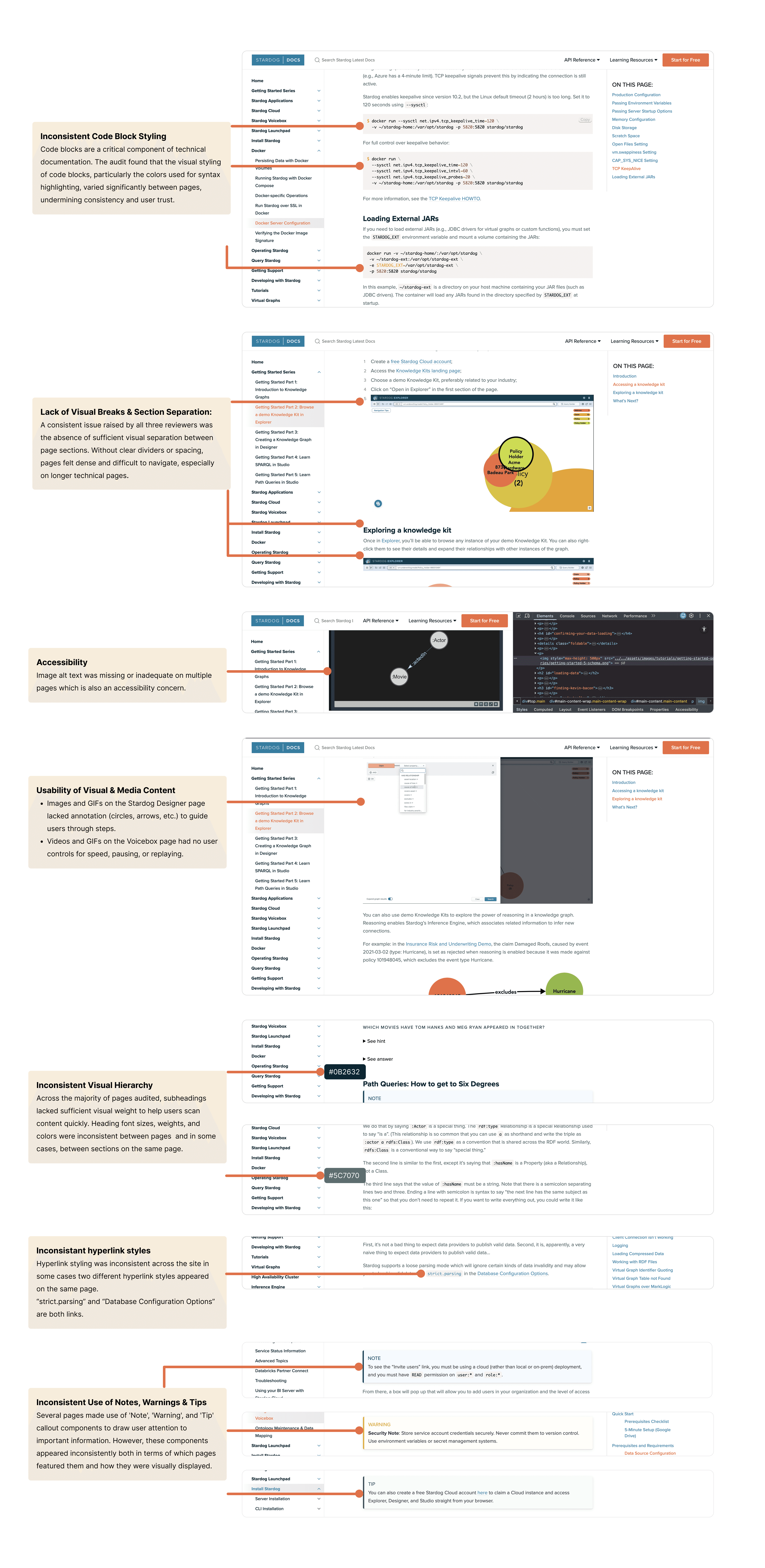
The content audit revealed systemic inconsistencies in visual structure, component usage, and accessibility across Stardog’s documentation. While the information itself is comprehensive, the lack of standardized design patterns, clear hierarchy, and consistent interaction cues increases cognitive load and reduces scannability.
Surveys
We surveyed 62 cross-functional employees across R&D (34%), Professional Services (21%), Sales (16%), and other departments to understand how internal teams use and perceive Stardog’s documentation
1. Documentation Functions as a Reference Library , not a Workflow System
2. Findability Is a Structural Problem, Not a Content Problem
3. Applied Examples Are the Biggest Opportunity
4. Troubleshooting Is the Weakest Link
5. Mental Model Misalignment Is Systemic
Check out more of my work
2025 • Concept • Built with AI
The Slow Fold
Transformed Hack4Impact’s recruitment system into a single, transparent platform that supports applicants, reviewers, and directors at scale.